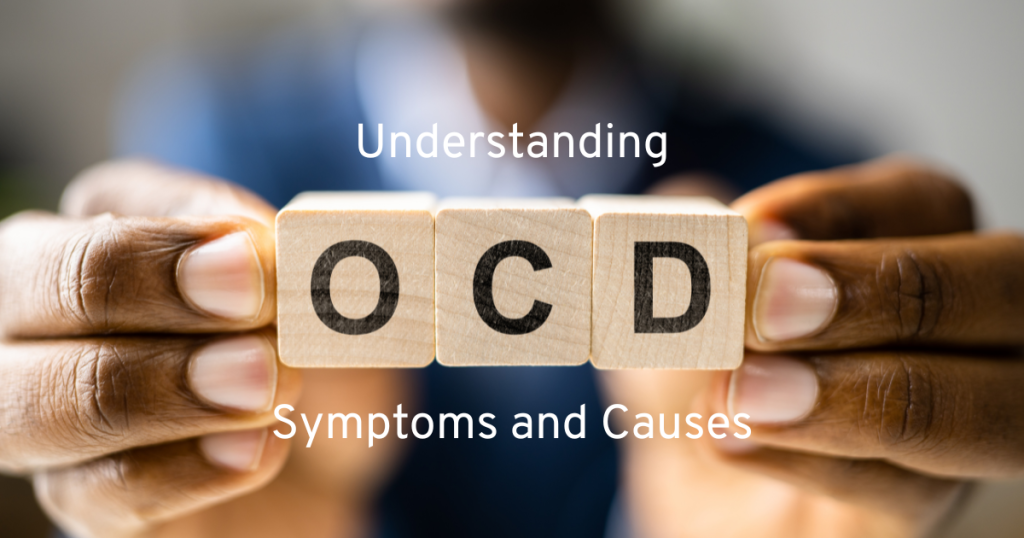
Understanding OCD symptoms and causes is the first step in managing your condition. Many people think OCD is simply about neatness or order, but it’s far more complex.
Obsessive–Compulsive Disorder involves unwanted intrusive thoughts and repetitive behaviours that aim to reduce anxiety. In reality, it can cause more anxiety day to day.
Most people living with OCD can experience:
- Intrusive or distressing thoughts that appear without warning
- Compulsions such as checking, counting, cleaning or seeking reassurance
- Feelings of doubt, guilt or fear of harm
These experiences can vary in intensity, but they often share one purpose, the need to feel safe and certain when the mind insists something isn’t “right.” It can sometimes manifest itself in various ways, something we will explore in this 8-blog series about Obsessive Compulsive Disorder.
Exploring the causes
There are a number of reasons OCD can present itself, some of these include-
- Genetics: A family history can increase likelihood.
- Brain chemistry: Imbalances in serotonin may contribute.
- Life experiences: Stress, loss or trauma can trigger or intensify symptoms.
It can be reassuring to know there are understandable reasons for these reactions, and in reality it can occur in anyone at anytime.
Recognising the signs is a positive first step in coping with OCD in everyday life.
Taking the first step
Becoming aware of OCD symptoms and causes is empowering. Awareness allows you to pause before reacting to intrusive thoughts or compulsions.
The trick is to start off slowly and to bring coping techniques in consistently each day, you can try:
- Labelling what is happening when the intrusive thoughts creep in: “This is my OCD talking.”
- Breathing slowly before physically responding.
- Writing down the triggers to spot patterns. Keeping a journal is ideal.
As you begin this process, remember that insight itself is progress. Every moment of awareness gives you a little more space between the thought and your response.
This article is part of my OCD Awareness and Recovery Series, which explores practical ways to understand, manage and reduce the impact of OCD in daily life. Read the next in the series here- Mindfulness practice for OCD awareness
You can learn more about OCD on my podcast episodes, which are filled with chats with experts, guidance and coping techniques- “Don’t get a therapist yet”