
Meditations for Anxiety, Trauma, Stress and Low Mood
Seven guided meditations to help you feel calmer, more grounded and more in control
When you are struggling with anxiety, trauma, stress or low mood, it can sometimes feel as though your mind and body never completely switch off. Your thoughts may race from one worry to another. You may replay conversations, imagine everything that could go wrong or find yourself constantly anticipating the next problem. Anxiety can make your heart race, your muscles tense and your breathing become shallow. Trauma can leave your nervous system feeling permanently on alert, even when you logically know that you are safe. Low mood can make everyday life feel exhausting, draining your motivation and making it harder to connect with the people and activities you normally enjoy.
Meditation will not remove every difficult thought or emotion, but it can help you develop a different relationship with them. Instead of being swept away by thoughts, memories and physical sensations, meditations can teach you to notice what is happening, gently bring your attention back to the present moment and respond with greater calm and compassion.
Research increasingly supports the use of meditation for emotional wellbeing and can reduce symptoms of anxiety and depression.
There is also promising evidence that mindfulness can be helpful alongside established treatment for people who have experienced trauma, although it should not be regarded as a replacement for trauma-focused psychological therapy when this is needed. The important thing is that you do not have to be ‘good at meditation’. You simply practise returning your attention, again and again. Choose the meditation that fits what you need today.
What's included?
1. Gratitude Heart Meditation
When your mind is focused on everything that is wrong, gently remind it of what is still good.
When we feel anxious, stressed or depressed, our attention naturally becomes drawn towards threats, mistakes and problems. This is partly the brain’s way of trying to protect us, but it can leave us feeling as though our whole life is negative.
The Gratitude Heart Meditation gently helps you shift your attention towards the people, experiences and small moments that bring comfort, meaning or pleasure.
Gratitude does not mean pretending that difficult things are not happening. It means allowing yourself to recognise that difficult experiences and positive experiences can exist at the same time.
This meditation may help you:
- Move your attention away from constant worry and negative thinking.
- Notice small positive experiences that are easily overlooked.
- Develop feelings of warmth, connection and appreciation.
- Build a more balanced perspective when life feels overwhelming.
- Create a calming practice before sleep or at the beginning of your day.
- Strengthen feelings of compassion towards yourself and others.
This can be particularly helpful when low mood, stress or anxiety has made your world feel increasingly negative.
2. Leaves on a Stream
You do not have to believe every thought your mind produces.
Have you ever tried to stop worrying, only to discover that the harder you try not to think about something, the more your mind seems to think about it?
Leaves on a Stream is a well-known mindfulness and Acceptance and Commitment Therapy-style exercise which teaches you to observe your thoughts rather than becoming caught up in them.
You imagine placing individual thoughts onto leaves and watching them float gently downstream. The goal is not to get rid of your thoughts. Instead, you practise noticing: ‘This is a thought. I do not necessarily have to react to it.’
This meditation may help you:
- Reduce overthinking and rumination.
- Step back from anxious predictions.
- Manage intrusive or repetitive thoughts.
- Stop treating every thought as a fact.
- Become less emotionally overwhelmed by your thinking.
- Develop greater psychological flexibility.
- Return your attention to the present moment.
This is particularly useful if your mind constantly produces “what if?” thoughts. Instead of fighting your thoughts, you learn to let them come and go.
3. Affectionate Breathing
Calm your breathing while learning to treat yourself with greater kindness.
When anxiety takes over, our breathing often becomes faster and shallower without us even noticing.
Affectionate Breathing brings your attention gently back to your breath while encouraging a compassionate attitude towards yourself. Rather than forcing yourself to calm down, you practise allowing the breath to become a reassuring anchor.
There is nothing you need to achieve and nothing you need to solve. Simply notice the breath and give yourself permission to pause.
This meditation may help you:
- Slow down when you feel overwhelmed.
- Bring your attention away from anxious thinking.
- Reduce feelings of emotional pressure.
- Increase feelings of safety and self-compassion.
- Develop a simple technique you can use almost anywhere.
- Create a pause between an emotion and your reaction to it.
Affectionate breathing can be particularly useful when you are feeling stressed, anxious, self-critical or emotionally overloaded.
4. Create Your Calm, Relaxing Place
Give your mind somewhere safe to rest.
When we are anxious or have experienced trauma, our brains can become extremely skilled at imagining danger. This meditation uses that same ability — imagination — in a completely different direction.
You are guided to create a personal calm or relaxing place in your imagination. It might be a beach, a woodland, a peaceful garden, a cosy room or somewhere completely imaginary. You gradually notice the sights, sounds, colours and sensations associated with your chosen place.
This meditation may help you:
- Feel calmer when your nervous system feels activated.
- Create a mental refuge during stressful periods.
- Reduce feelings of overwhelm.
- Prepare your mind and body for sleep.
- Ground yourself following an emotionally difficult day.
- Develop stronger associations between imagery and relaxation.
With repeated practice, simply imagining your calm place can become a useful cue that reminds your mind and body: “Right now, I am safe enough to slow down.”
5. Healing Light Meditation
Imagine warmth, comfort and healing moving gently through your body.
When we experience prolonged stress or trauma, distress is not always experienced simply as thoughts. It may be felt physically: a tight chest, a heavy stomach, tense shoulders, or a feeling of pressure or discomfort somewhere in the body.
Healing Light Meditation uses gentle guided imagery to imagine a soothing light moving through the body, bringing warmth and comfort to areas that feel tense or distressed.
This meditation may help you:
- Release some physical tension.
- Develop greater awareness of sensations in the body.
- Create a feeling of warmth and comfort.
- Encourage self-soothing.
- Reduce the sense that you must fight uncomfortable sensations.
- Build a kinder and more compassionate relationship with your body.
For some people, visualisation makes relaxation easier because the mind has something soothing and positive to focus upon. You do not need to visualise perfectly.
6. The Body Scan
Stop living entirely inside your thoughts and reconnect with your body.
Many of us spend most of the day thinking: planning, remembering, worrying, problem-solving and predicting.
The Body Scan Meditation invites you to move your attention slowly through different areas of your body and simply notice what is there. You may notice warmth, tension, tingling, heaviness, relaxation — or perhaps very little at all. There is nothing you need to change. The practice is simply to notice.
This meditation may help you:
- Become more aware of physical tension.
- Ground yourself in the present moment.
- Move attention away from repetitive thinking.
- Develop greater awareness of the connection between thoughts, emotions and physical sensations.
- Relax after a stressful day.
- Prepare your body and mind for sleep.
- Recognise earlier when stress is beginning to build.
The Body Scan is particularly helpful for people who often say: “I cannot switch my brain off.”
7. RAIN Meditation
A simple four-step approach for difficult emotions.
Sometimes emotions arrive with enormous intensity: anxiety, sadness, anger, fear or shame. Our instinct may be to push the feeling away, distract ourselves or criticise ourselves for feeling it. RAIN offers another approach.
R — Recognise: Notice what you are experiencing.
A — Allow: Instead of immediately fighting the feeling, allow it to be present for a moment.
I — Investigate: Gently become curious. Where can you feel the emotion in your body? What thoughts are accompanying it? What might you need?
N — Nurture: Respond to yourself with kindness and compassion.
This meditation may help you:
- Manage difficult emotions without becoming completely overwhelmed.
- Develop greater emotional awareness.
- Reduce avoidance of uncomfortable feelings.
- Respond rather than react.
- Understand what your emotions might be communicating.
- Develop greater self-compassion.
- Create space between yourself and intense emotional experiences.
RAIN can be particularly useful when you know something has triggered you but are not quite sure what to do with the emotion that follows.
Which Meditation Should I Choose?
If you are worrying or overthinking: Leaves on a Stream.
If you feel anxious or overwhelmed: Affectionate Breathing.
If you need to feel safe and settled: Create Your Calm, Relaxing Place.
If you feel physically tense or emotionally exhausted: Healing Light.
If your mind will not switch off: The Body Scan.
If you are struggling with a powerful emotion: RAIN.
If low mood has left you focusing only on what is wrong: Gratitude Heart Meditation.

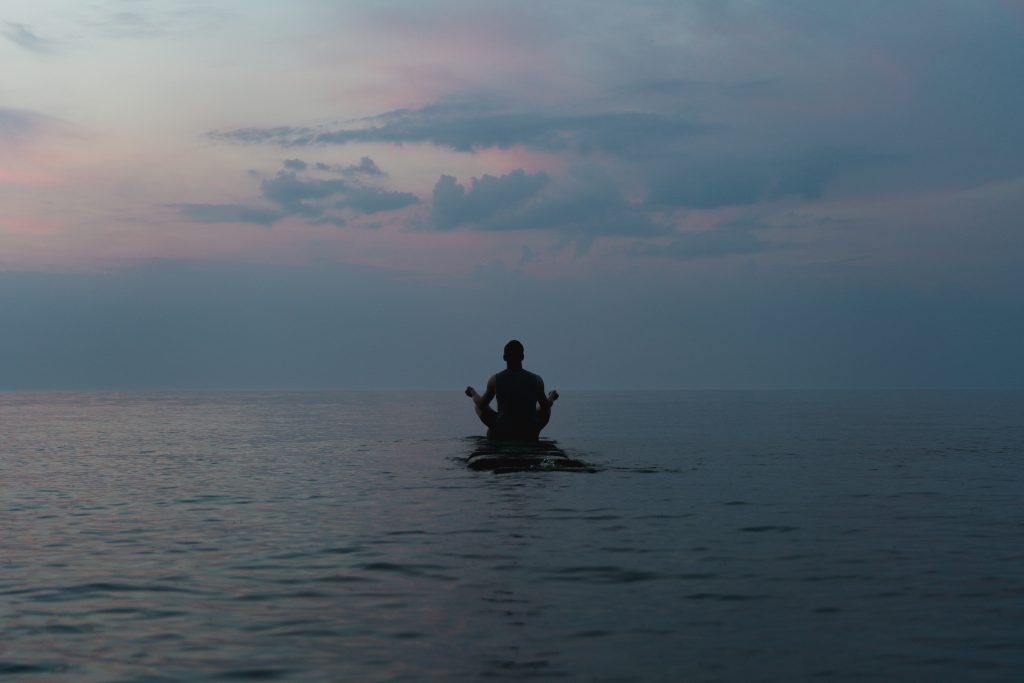
You Do Not Need to Empty Your Mind to Meditate
One of the biggest misunderstandings about meditation is that you are supposed to stop thinking. You are not. Your brain is designed to think.
During meditation your mind may wander dozens of times. That is completely normal. The practice is simply this: notice that your mind has wandered and gently bring your attention back. Every time you do that, you are practising.
You can start with just a few minutes. There is no perfect way to meditate and there is no competition. The aim is not to become someone who never feels anxious, sad or stressed. The aim is to become someone who has more tools for responding when those feelings appear.
Make Meditation Part of Your Emotional Toolkit
Meditation works best as a skill that you practise rather than something you only reach for when life becomes unbearable. You might listen:
- First thing in the morning.
- During your lunch break.
- After work.
- Following a stressful conversation.
- Before going to sleep.
- Whenever you notice your anxiety beginning to rise.
Even a short period of mindful attention can create an opportunity to step away from automatic reactions and reconnect with the present moment.
Meditation should be viewed as one part of looking after your mental health, rather than a replacement for professional treatment when that is required. Research suggests mindfulness can be helpful for anxiety and depression, but individual responses vary. For people with significant trauma, some forms of meditation can occasionally increase distress or bring difficult memories or sensations into awareness, so it is sensible to stop and seek professional guidance if a practice feels overwhelming.
Give yourself permission to pause.
Choose the meditation that feels right for you and press play.
Research References
- Goyal, M. et al. (2014). Meditation programs for psychological stress and well-being: a systematic review and meta-analysis. JAMA Internal Medicine, 174(3), 357–368.
- Hofmann, S. G. et al. (2010). The effect of mindfulness-based therapy on anxiety and depression: a meta-analytic review. Journal of Consulting and Clinical Psychology, 78(2), 169–183.
- National Center for Complementary and Integrative Health (NCCIH). Meditation and Mindfulness: Effectiveness and Safety.
- Research evidence on mindfulness-based interventions for trauma and PTSD indicates potential benefit as an adjunct to established treatment, while recognising that responses vary and trauma-focused therapy may still be required.