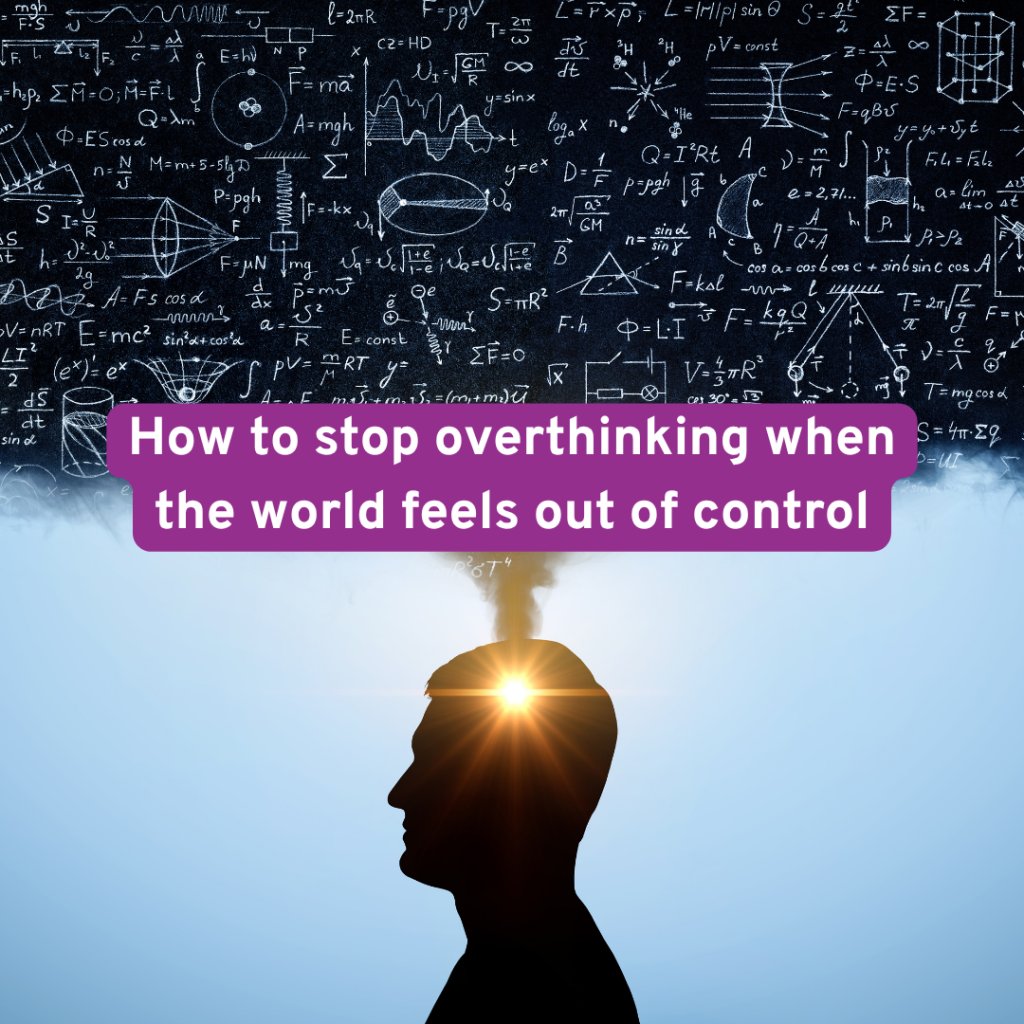
Your mind is a great storyteller and learning how to stop overthinking is key to managing anxiety and stress.
One of the most exhausting things about anxiety is that it talks in headlines. Everything is catastrophic. Nothing is safe. The worst is definitely going to happen.
It is hard to stop your mind from overthinking or forcing yourself to think positively. But you can learn to notice when your brain has slipped into storytelling mode, and gently step back out of it.
Your brain is doing its job, just a bit too well
Anxiety is your nervous system doing exactly what it was designed to do, which is scan for danger and try to prepare you for it.
The problem is that an anxious mind does not always distinguish well between a genuine threat and a story it has constructed based on incomplete information.
Research consistently shows that overthinking, particularly when it involves ruminating on negative outcomes, is closely linked to increased anxiety and low mood. The more you turn a worry over in your head, the more real and urgent it starts to feel, even when the facts do not actually support the worst-case scenario.
Thoughts are not facts
This is one of the most powerful ideas in CBT, cognitive behavioural therapy, and it sounds simple until you are in the middle of a spiral at 2am.
A thought like “this situation is going to fall apart completely” feels absolutely true in that moment. But it is still a thought, not a fact.
When you are working out how to stop overthinking, a small language shift can make a real difference.
Instead of saying “everything is going to go wrong,” try saying “I am noticing a thought that everything is going to go wrong.”
That tiny bit of distance between you and the thought is where your rational brain gets a chance to step back in.
A simple technique to try
Next time your mind starts spiralling, try this:
- Write down the thought that is distressing you
- Ask yourself what the actual evidence is for and against it
- Write down what you know to be factually true right now
- Ask yourself what you would say to a friend who had this same thought
This is not dismissing your feelings. Your feelings are real and valid. You are checking whether the story your mind is telling matches what is actually happening, rather than what anxiety is predicting might happen.
Worry has a time and a place
Another really helpful tool is to give your worries a dedicated window.
Choose a specific time in your day, maybe fifteen minutes in the early evening, and that becomes your worry time.
If anxious thoughts come up outside of that window, you simply tell yourself you will think about it later.
Your mind gets the message that the worry has been acknowledged, which takes some of the urgency away. Over time this genuinely reduces how much overthinking bleeds into the rest of your day.
How to stop overthinking is building a different relationship with your own mind. Not fighting it, not judging it, just learning to observe it with a little more curiosity and a lot more compassion.
I recently recorded an episode of Don’t Get a Therapist Yet where I looked at how we can manage anxiety, stress, worry and stop overthinking during war. To listen to the full episode, click the links below or subscribe to my YouTube channel
For more information on overthinking, worry, anxiety, or stress, explore my blog page
Apple
Spotify
YouTube