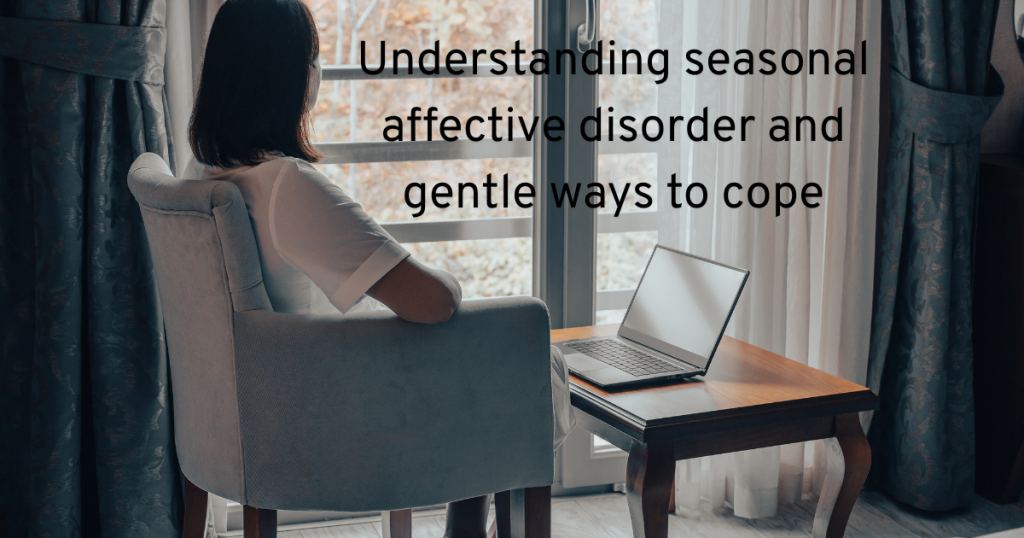
Understanding seasonal affective disorder is often the first step towards feeling less alone with how winter can affect your mood.
Many people I speak to feel confused, anxious, worried or depressed when the days get darker and shorter, yet this experience is far more common than you may realise.
What Seasonal Affective Disorder (SAD) actually is
Seasonal Affective Disorder (SAD), is a form of depression linked to changes in the seasons.
For most people, it begins in autumn or winter, when daylight reduces, and our routines change. Symptoms can include low mood, tiredness, difficulty concentrating, changes in sleep, comfort eating, and a sense of wanting to withdraw.
Understanding Seasonal Affective Disorder helps people see that this is not a personal failure. Your brain and nervous system are responding to reduced light, colder weather, and often less movement and social contact.
This is why the “New Year, New Me” trend needs to be changed! January is not the time for starting a brand new routine!
When we understand this, we can respond with compassion rather than self-criticism.
Why winter feels so hard emotionally
As daylight reduces, our internal body clock can become disrupted. This can affect serotonin and melatonin, both of which play a role in mood and sleep. At the same time, winter often brings fewer opportunities to be outdoors, more isolation, and pressure to keep functioning as normal.
Understanding Seasonal Affective Disorder means recognising that your low energy is not laziness. It is your system asking for care and adjustment.
A simple everyday practice that helps
One of the most helpful positive practices I recommend is building a predictable, gentle daily anchor. This is one small activity you do at roughly the same time each day, regardless of mood.
This could be:
- a short walk, even if it is grey and cold
- sitting by a window with a warm drink
- stretching or breathing for two minutes
When you practise this consistently, you are giving your nervous system a sense of rhythm and safety. Understanding seasonal affective disorder reminds us that small, steady actions matter more than motivation.
Holding onto small positives
Winter does not need to be joyful to be meaningful. Try noticing one thing each day that was ok, even if it feels tiny. A moment of warmth, a kind interaction, or the fact you got through the day. These moments gently retrain the brain to see more than just the darkness.
There are plenty of episodes on how to cope with anxiety especially in this time of the year on my YouTube channel.
Why not read on to find out Why daylight matters so much when you have SAD