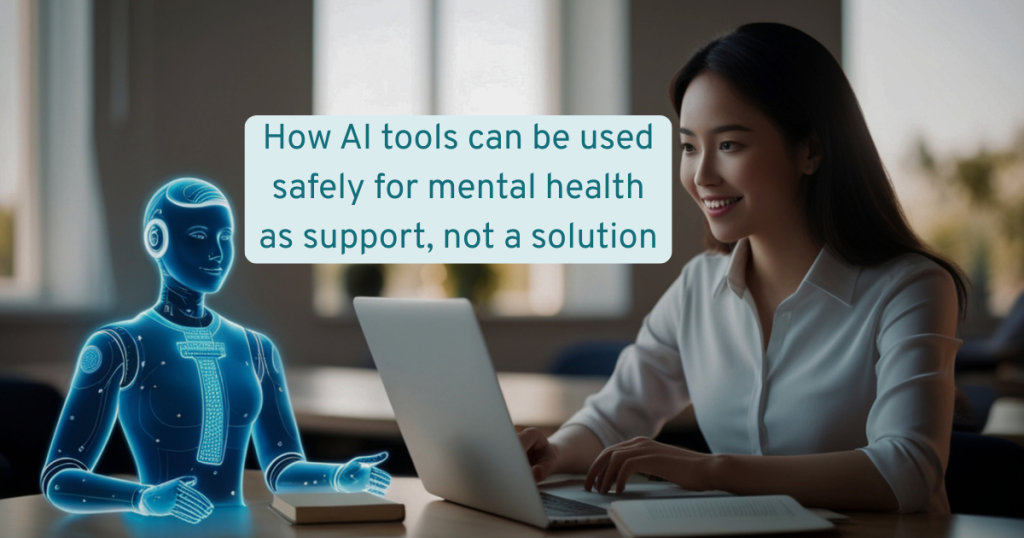
AI tools can be used safely for mental health support and are fast becoming part of many people’s coping strategies.
When used thoughtfully, they can offer structure and support during difficult periods as a temporary fix.
How AI tools can support daily wellbeing
There are some AI tools which can be used for help with journaling, mood tracking, sleep routines, and planning manageable steps. For instance, it can help you keep a diary of your thoughts, feelings, triggers and even give you a suggested daily routine. This can help you fit in things like breathing and grounding exercises or even wellness stacking into your everyday life.
These tools can support consistency, which is often helpful for emotional wellbeing.
Choosing safer AI tools for mental health
Not all AI tools can be used safely for mental health support, as not all are created equally.
Look for tools that are transparent about their purpose and limits. Tools based on evidence-informed practices are safer than open-ended advice bots (like ChatGPT)
Avoid using AI for diagnosis or medication advice at all costs!
Limits of AI tools for mental health
AI tools do not assess risk or hold responsibility for safety. They cannot respond to a crisis or complex emotional needs.
They are not designed for severe depression, trauma, psychosis, or safeguarding situations.
Combining AI tools with human care
Best practise is for AI to work alongside therapy or other support. It can reinforce skills and offer structure between sessions.
I discuss this balanced approach on this week’s episode of “Don’t Get a Therapist Yet”, where we look at AI as part of a wider support system rather than a replacement. There are also more resources on my blog page
If symptoms escalate or safety is a concern, human support is essential.