
Latest Articles
Below is a sample of blogs for you to read and listen to.
They are designed to help you learn more about particular topics you are interested in. Enjoy!
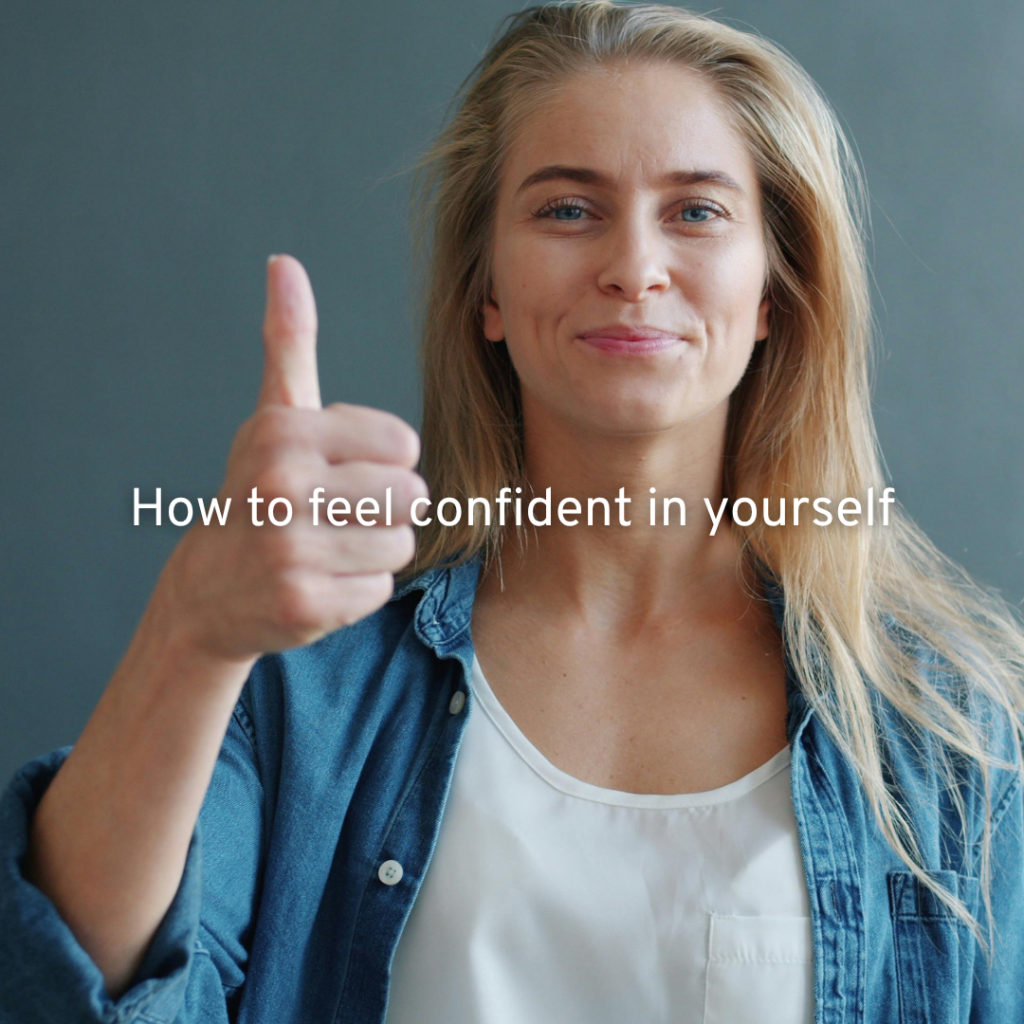
How to feel confident in yourself
Learning how to feel confident in yourself is something you build over time. While it might feel out of reach right now, it’s far more learnable than you think, even if you’re starting from a place of self-doubt, anxiety or fear.
Confidence is not a personality trait that some people are born with and others simply miss out on, it is a skill, and like any skill, it can be learned, practised and grown over time.
What is confidence?
Before you can begin building confidence, it helps enormously to understand what it actually is, because most people have been thinking about it in a way that makes it feel permanently out of reach.
Confidence is not about feeling fearless or certain or unshakeable, those things are not even realistic goals for most human beings. Real confidence is the ability to act when fear is present, to say to yourself “I feel nervous about this and I’m going to try anyway,” to make a mistake and trust that you will be okay, to disappoint someone and still respect yourself.
When you reframe confidence in this way, it stops being this distant, unattainable quality that other people have and starts being something you can practise in small, manageable moments every single day. And that is exactly how to feel confident in yourself, not through one dramatic breakthrough, but through a quiet accumulation of moments where you showed up, tried, coped and learned.
Why avoidance is your biggest enemy
One of the most important things to understand about confidence is that avoidance is what erodes it. Every time you avoid the thing that scares you — the conversation, the question, the video, the boundary, the honest answer, your brain registers that avoidance as survival. It learns that you only got through that moment because you didn’t engage with it, and so the next time a similar situation arises, the fear response is even stronger.
This is a well-documented pattern in Cognitive Behavioural Therapy, and understanding it is one of the most powerful steps in learning how to feel confident in yourself, because it shifts the goal from “feeling confident before I act” to “taking the action so that confidence can grow.”
The action always comes first. The feeling follows.
Small steps that build real confidence
You do not have to throw yourself into the deep end to start building confidence, in fact, doing so often backfires and reinforces the belief that you cannot cope. Instead, therapy-informed approaches encourage what is known as behavioural experiments, small, manageable actions that gently challenge your fear and give your brain new evidence that you are capable.
Some examples of confidence-building small steps include:
- Speaking up once in a meeting or group conversation rather than staying silent throughout
- Saying “I’ll get back to you” instead of immediately agreeing to something you’re unsure about
- Posting the thing you’ve been putting off because it isn’t perfect yet
- Asking one question you’ve been too embarrassed to ask
- Expressing one honest preference instead of defaulting to “I don’t mind”
- Booking the appointment, sending the email or making the call you have been avoiding
None of these are enormous gestures, and that is precisely the point. Confidence grows in the small moments, and every single one of them counts — and this is how to feel confident in yourself in a way that actually lasts.
The role of self-talk in confidence building
The way you speak to yourself matters enormously when you are trying to feel more confident in yourself, and for many people the inner voice is not a particularly kind or encouraging one. It says things like “don’t bother, you’ll only mess it up” or “everyone will judge you” or “who do you think you are?” — and those messages, repeated often enough, become the soundtrack that keeps you small and stuck.
Compassion Focused Therapy teaches us that this inner critic is not the truth about who you are — it is a fear response, a protective mechanism that developed to keep you safe, often rooted in early experiences of criticism, rejection or not feeling good enough. When you understand where it comes from, it becomes a little easier to respond to it with curiosity rather than belief.
Try asking yourself: would I say this to someone I loved who was trying something new and feeling scared? If the answer is no, then it deserves a gentler response — not toxic positivity, not pretending everything is fine, but something honest and kind, like “this is hard and I’m going to try anyway.”
You were not born doubting yourself
Perhaps the most important thing to hold onto as you begin this journey is that low confidence is not your natural state, it is something that developed in response to your experiences, your environment and the messages you received along the way. That means it is not permanent, it is not fixed and it is not who you are.
Learning how to feel confident in yourself is not about becoming a different person , it is about finding your way back to the version of yourself that existed before the doubt crept in, and giving that person the tools, the evidence and the compassion they need to come forward again.
You are more capable than you currently believe. And the fact that you are here, reading this, is already the first step.
Watch the full podcast episode of Don’t get a therapist yet over on my YouTube channel
Download my eBook on boosting self-esteem here

Sign up to access FREE Online Learning Resources
Sign up to our newsletter and we’ll give you our 10 part Sleep Course completeley FREE
