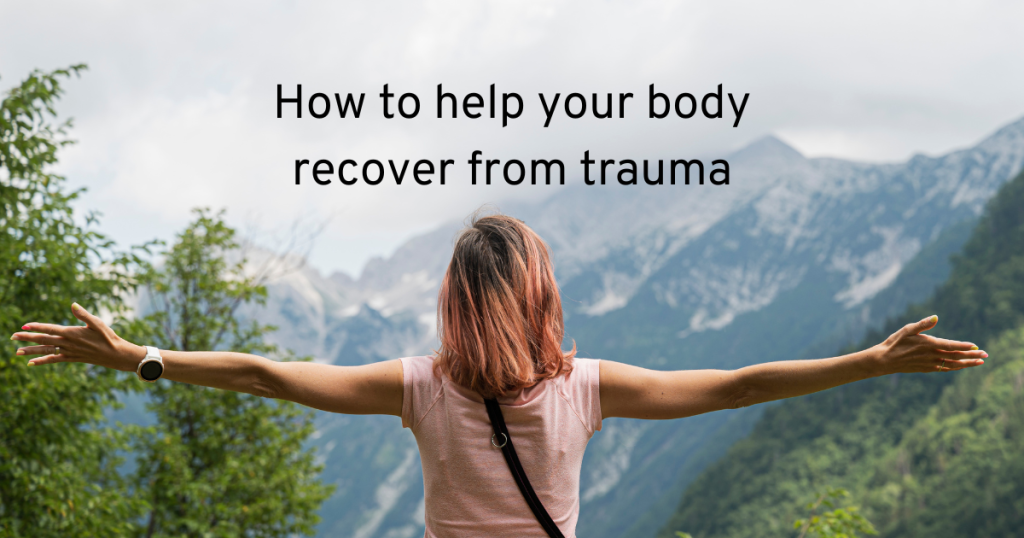
Learning how to help your body recover from trauma can be just as important as understanding what happened in your mind.
Trauma recovery isn’t only about talking through memories. Because trauma lives in the nervous system, healing often involves helping the body feel safe again, slowly and consistently.
Why the body needs support
After trauma, the nervous system can remain stuck in survival mode. Even when danger has passed, the body may still respond as if it’s present.
This is why grounding, regulation, and body-based approaches are central to recovery.
Ways to help your body recover from trauma
Supportive practices may include:
- Gentle grounding techniques (feeling the feet, slow exhalation)
- Breathwork that emphasises longer exhales
- Reducing constant stimulation and overworking
- Establishing predictable routines
- Safe movement that reconnects body awareness
- Compassionate self-talk during body reactions
These approaches don’t “fix” trauma, they help the nervous system settle enough to feel safer.
Trauma-focused therapy and the body
Therapies like EMDR are designed to help the brain and body process trauma memories together. EMDR uses bilateral stimulation to help the nervous system update old threat responses.
Research shows EMDR can reduce physiological arousal, supporting the parasympathetic nervous system, the part responsible for rest, digestion, and recovery. This is one evidence-based way to help your body recover from trauma at its source.
Between-session support matters
Recovery doesn’t only happen in therapy sessions. Learning regulation tools, pacing energy, and recognising early signs of activation can make a meaningful difference over time.
The key takeaway
Healing from trauma is not about forcing calm or “moving on.” It’s about gently teaching the body that the danger is over, again and again, until safety becomes the new default.
My recent episode of “Don’t get a therapist yet” delves into the body’s trauma response and EMDR. Give it a listen here read more on trauma and EMDR on my blog page