Please find below a range of topics on mental health for you to watch and listen to.
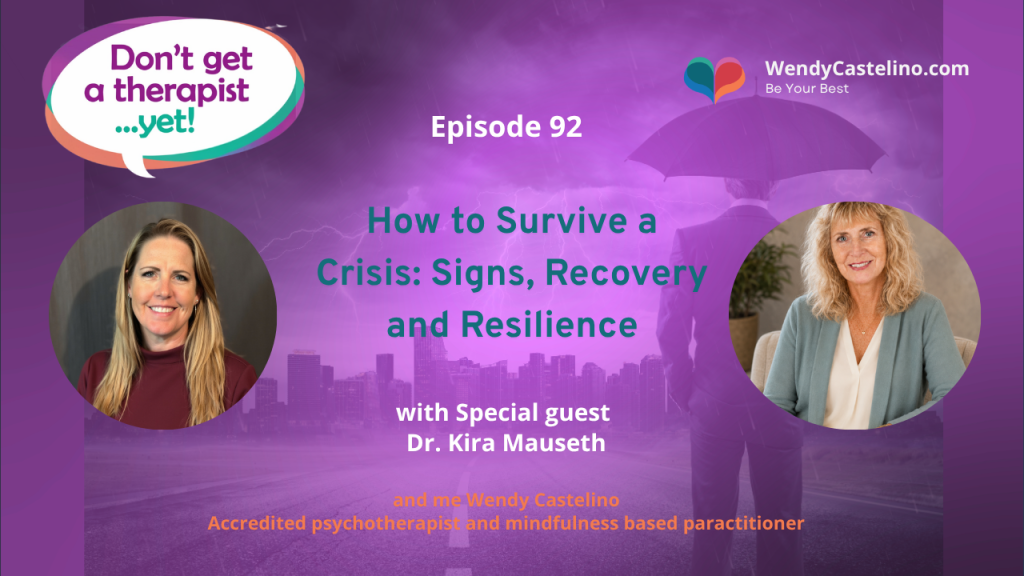
How to Survive a Crisis: Signs, Recovery and Resilience
Lately it feels like one thing after another, doesn’t it? Feeling foggy, exhausted or a bit on edge isn’t just in your head. I wanted to get into how to survive a crisis properly, so I sat down with someone who has worked with survivors all over the world.
Learning How to Survive a Crisis with Dr Kira Mauseth
Dr Kira Mauseth is a disaster psychologist who has supported survivors, first responders and refugees through earthquakes, wildfires and displacement. She joins me in this episode to talk about what stress does to your brain and body, and to share a few tools you can try today.
Here’s a taste of what she shared with me:
Why you feel foggy, forgetful or on edge after a hard time, and why that’s a normal stress response
How to lower cortisol using simple sensory tools
Why exhaustion hits so hard, and what sleep hygiene actually involves
How communities recover together, and why support tends to fade just when it’s needed most
The four ingredients of resilience: connection, adaptability, hope and purpose
How people find purpose again after losing everything
The difference between hope and optimism
Kira has been in the room with people at some of their hardest moments, in disaster zones and refugee camps, and what she shares comes from that experience, not a textbook. This is a proper look at how to survive a crisis, whatever that means for you right now.
You’ll come away with things you can try, ways to calm your body in the moment and find your footing again when everything feels different. Some of it might surprise you. Some of it might just put words to something you’ve been feeling for a while. If you’re supporting someone through a hard time, or trying to work out how to survive a crisis yourself, there’s something in this one for you.
Timestamps
0:00 – Welcome to Don’t Get a Therapist Yet
0:32 – Meet Dr Kira Mauseth, disaster psychologist
1:47 – What is a disaster cycle and a disaster cascade
5:37 – How crisis mode changes your brain and body
8:09 – Signs of chronic stress and burnout
10:49 – Brain fog and memory problems after trauma
12:39 – How to lower cortisol with sensory grounding
16:14 – The frozen orange grounding technique
17:48 – Why crisis leaves you exhausted
21:26 – What is sleep hygiene
22:58 – How communities recover after a disaster
26:05 – Preparing communities before disaster strikes
31:03 – The 4 ingredients of resilience
35:30 – Finding purpose after losing everything
39:53 – Why getting back to normal can hold you back
45:10 – Hope vs optimism: what’s the difference
52:40 – Everyday emergencies and finding purpose through helping
53:44 – Where to find Dr Kira Mauseth
Meet Dr Kira Mauseth
Kira is a Teaching Professor at Seattle University, a practicing clinical psychologist and affiliate faculty at the SMART Center at the University of Washington. During the COVID response, she co-led the Behavioral Health Strike Team for the Washington State Department of Health, and she now sits on the adult mental health clinical seat on Washington State’s Disaster Medical Advisory Committee.
Through her company, Astrum Health, she works with organisations, education groups and state agencies on disaster preparedness, crisis recovery and building resilience. Her research looks at disaster behavioural health, resilience and recovery from trauma, along with how communities respond to critical incidents both large and small. She has worked with disaster survivors and refugees abroad, and has trained first responders and healthcare workers across Puget Sound and the wider United States.
For more resources on Overcoming Trauma, download my e-book
For more podcast episodes on trauma head over to my YouTube channel where you can find a whole playlist on Trauma Therapy
This episode is for general information and conversation, not professional advice. It’s not a replacement for therapy, medical care or any kind.
If you’re going through a crisis or struggling with your mental health, please reach out to a qualified professional or a trusted support service in your area. If you’re in immediate danger or need urgent help, contact your local emergency services.