Setting goals you will stick to is something I think about every year!
It can feel impossible when life is busy or emotionally draining, but it can be easier with a gentler approach. The first step to creating goals you will stick to is connecting them to your values, just as discussed in a podcast episode I co-host with Ian Stockbridge of Hope Therapy and Counselling called The Talk Room.
Start with what matters
The first thing to do is think about what is genuinely important to you. This isn’t about what you think you should focus on, but what would actually make life feel a little easier or more meaningful.
For many us, key values include connection, health, calm, purpose or joy. When goals grow from these values, they naturally become goals you will stick to because they feel supportive rather than forced.
Here are a few simple examples:
• Connection: sending one message a week to someone you trust, or catching up with a friend over coffee once a month
• Health: taking a short walk a few times a week, or making sure at least one meal a day has half a plate of fruit or veg
• Calm: practising a couple of minutes of breathing daily, starting a Yoga class, or reducing one unnecessary commitment
• Purpose: volunteering, sorting out your cupboards and giving to charity, starting a new hobby
• Joy: Do something you have never done before, dedicate one evening a week, or a month, to doing something you really love!
Small, value led actions like these are far easier to maintain and feel much kinder than big, unrealistic resolutions.
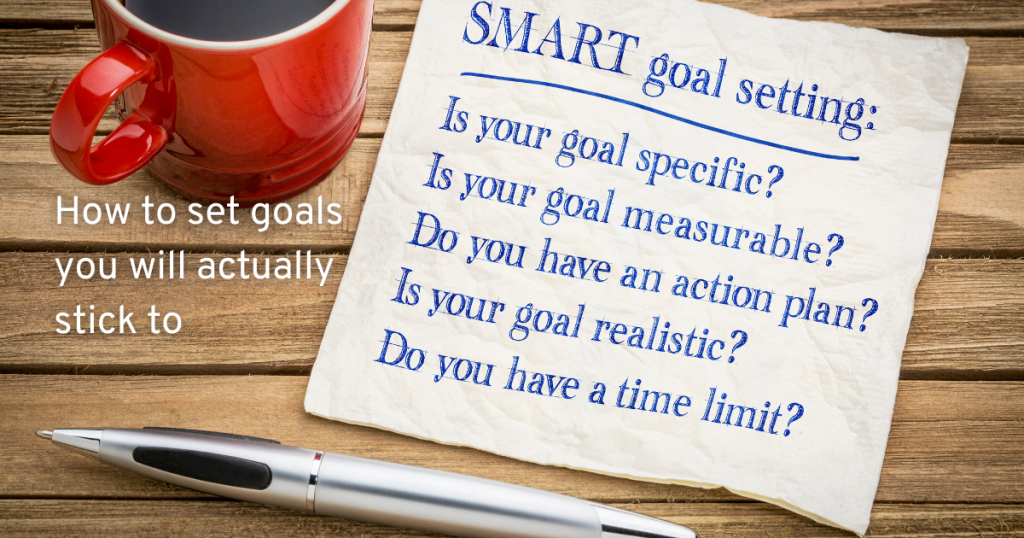
Make them SMART
SMART goals are Specific, Measurable, Achievable, Relevant and Time bound (SMART) .
This structure is used in various parts of business and life and helps turn vague intentions or goals into practical actions.
For example, instead of aiming to be calmer, you might decide to practise three minutes of mindful breathing daily. This clarity helps you create goals you will stick to because you always know your next step, and you can plan it into your day.
Plan for barriers
As with most things, there will be a time when real life will get in the way.
Expect it.
Planning for obstacles reduces disappointment and helps you stay steady during stressful moments.
Think about what might get in the way and write down simple alternatives that keep you moving forward. For instance, will commitments to your family one week get in the way of hobby time? Then plan around it.
Build tiny habits
The first thing to do is think about what is genuinely important to you. This isn’t about what you think you should focus on, but what would actually support your wellbeing in everyday life.
Once you have identified a value, the next step is to turn it into a small, realistic action. A helpful way to do this is to follow a simple formula:
Value → intention → small action
Start by naming the value. Then decide what that value means for you personally. Finally, choose one small action that reflects it. The action should feel manageable even on a difficult day.
When creating the action, ask yourself:
• can I do this in a short amount of time
• can I do this regularly
• would this still feel achievable when life is busy
Keeping actions small reduces pressure and makes change feel safer. These gentle steps are far more likely to turn into habits over time.
When goals are built this way, they feel aligned rather than forced. You are no longer trying to change everything at once. You are simply making choices that reflect what matters to you, one step at a time.
Review regularly
A monthly check in helps you notice what is working and what needs adjusting.
Reviewing progress takes the pressure off and creates a sense of control, especially when stress or anxiety starts to build. Regular reviews keep your goals you will stick to feeling balanced and manageable.
Read the next blog in the series- How to get back on track when you break your resolutions