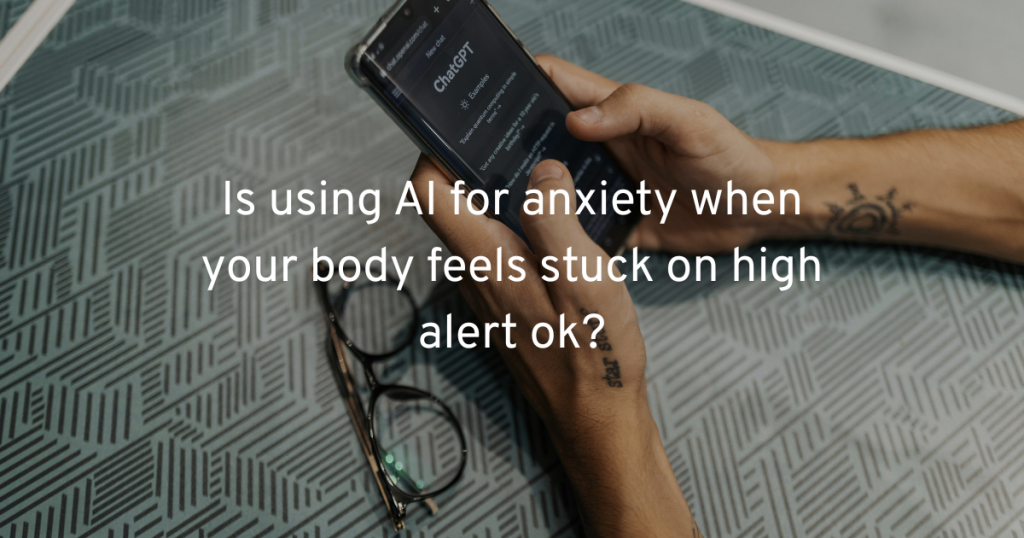
Using AI for anxiety has become a common way many people try to calm their nervous system when they start to feel overwhelmed.
For some, it becomes the first place they turn when their body feels tense, breathing is shallow, and thoughts will not settle. And who can blame them, with this digital FAQ style app write at our fingertips it is a quick way of trying to get help.
Is it the right move when you are anxious?
Can AI help calm your nervous system?
AI can guide simple grounding exercises like slow breathing, muscle relaxation, or sensory focus, which can help take the edge off in the moment.
This support is fairly basic though, and while it may help you get through a difficult patch, approaches that are personalised and supported by a trained professional are usually more effective for lasting change. Finding a qualified therapist who can talk you through guided meditation is a much better alternative. You can find these for free on YouTube.
Can AI help day to day with coping strategies?
Anxiety often improves when sleep, food, movement, and structure are more consistent. AI tools can prompt gentle check-ins, journaling, or planning small achievable actions for the day.
This kind of support can be helpful for mild to moderate anxiety, especially when access to therapy is limited. If anxiety is more severe, then advice from a trained professional should be your first point of call.
Limits and considerations when using AI for anxiety
Anxiety can sometimes appear while being driven by deeper patterns underneath. Using AI for anxiety does not replace understanding those patterns, triggers, or emotional history.
Human support is needed
If anxiety is escalating, disrupting sleep, or leading to avoidance or distress that does not improve, human professional support is important. A therapist can assess risk, tailor care, and adapt help that AI simply cannot do.
I discuss this balance in depth on my podcast “Don’t get a therapist yet” and you can read more on AI for mental health in my blog series