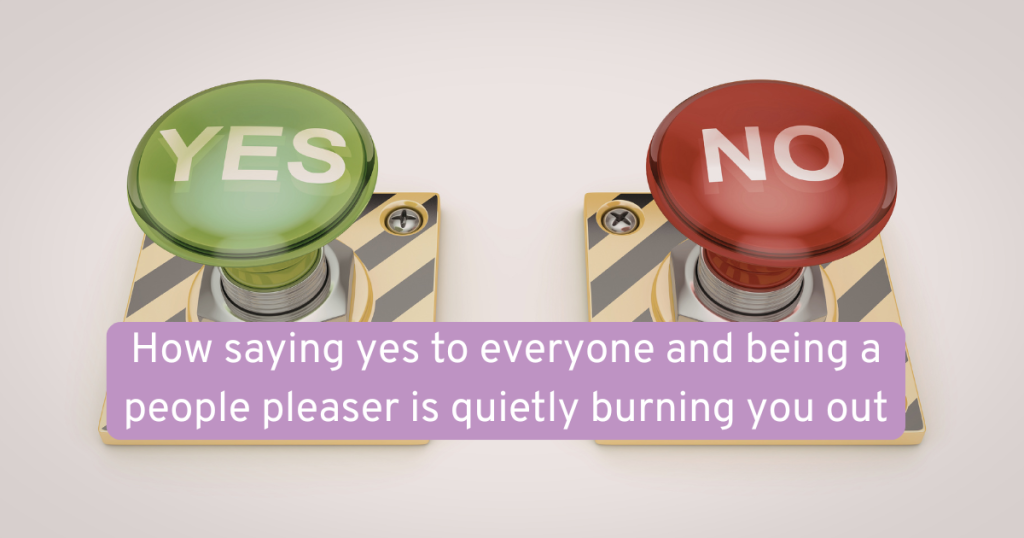
Are You a People Pleaser? You’re the one who always says yes. You pick up the extra work. You don’t want to let anyone down. You smooth things over before they become a problem.
And on the outside, you probably look like you’ve got it together.
But if you’re a people pleaser, there’s a good chance the cost of all that ‘yes’ is quietly adding up, and burnout could be where it’s heading.
Why people pleasing is so exhausting
People pleasing isn’t just a personality trait, it’s an internal pressure that sits on top of everything else you’re already carrying.
Clinical psychologist Dr Claire Plumley describes it perfectly: when you’re always putting other people’s needs before your own, you stop listening to yourself. Your own needs, your own limits, your own inner voice, they get pushed to the back of the queue, again and again.
And here’s the thing about being a people pleaser: every time you say yes to something you don’t have the capacity for, you’re saying no to something else. Usually that something else is you, your rest, your time, your health.
The guilt trap
So why is it so hard to change? Because the moment you try to set a boundary or say no, guilt shows up. And for a people pleaser, that guilt can feel unbearable, like proof that you’re being selfish or letting people down.
But here’s what’s really happening: guilt in this situation isn’t a sign you’ve done something wrong. It’s just a feeling you’re not used to tolerating. The more you’ve ignored your own needs, the louder guilt gets when you finally start to honour them.
The work isn’t to get rid of the guilt, it’s to feel it and choose yourself anyway. Over time, it does get quieter.
Where people pleasing comes from
For many people, this pattern goes way back. Sometimes saying yes, keeping the peace, and making yourself agreeable felt like the safest option as a child.
Maybe conflict was frightening. Maybe your worth felt tied to how helpful or ‘good’ you were. Those early experiences shape how we move through adult life, and they can keep us stuck in patterns that no longer serve us, even when we can see they’re not working.
Recognising that your people pleasing has roots is not about blame. It’s about understanding yourself with a bit more compassion.
One small step to start
You don’t have to transform overnight. But start noticing when you say yes and what it costs you. Notice the moment before you agree to something, is it genuinely something you want to do, or is it fear of how the other person will react?
That pause is the beginning of everything. Wendy and Dr Claire Plumley talk about this in depth on the Don’t Get a Therapist Yet podcast, including how therapy can help untangle where people pleasing comes from.
Have a listen here: Burnout recovery begins when you stop blaming yourself